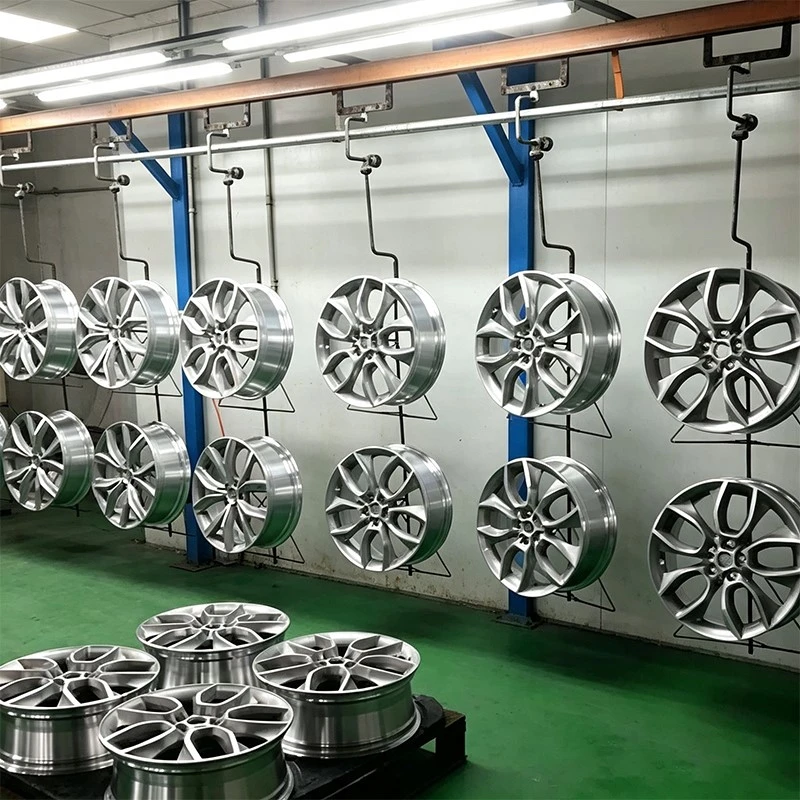
A coating production line is a complex and precise system primarily composed of the following seven key components:
Pre-treatment Equipment: Commonly used systems include multi-stage spray pre-treatment units, which utilize mechanical washing and chemical reactions to perform steps such as degreasing and phosphating (e.g., pre-degreasing, degreasing, and phosphating). Additionally, shot-blasting machines are suitable for treating heavily rusted or oil-free steel parts without causing water pollution.
Powder Coating System: This system employs a "mini-cyclone plus filter cartridge" recovery unit, featuring advanced technology and rapid color-change capabilities. It is recommended to use imported products for critical components-such as the powder coating booth and electric lifters-to ensure quality and efficiency.
Liquid Painting Equipment: Examples include oil-curtain and water-curtain spray booths, which are widely used for the surface coating of products such as bicycles, automotive leaf springs, and large loaders.
Curing Oven: The oven is crucial for ensuring coating quality. Various heating methods are available, such as radiation and hot-air circulation. Options include single-chamber or pass-through ovens, with configurations ranging from straight-through to bridge-style designs. Hot-air circulation ovens offer superior performance, maintaining temperature fluctuations within ±3°C.
Heat Source System: Hot-air circulation is a common heating method; the heat source can be selected based on user requirements-such as electricity, steam, natural gas, or fuel oil. The heat source unit is positioned according to the oven design and utilizes specialized high-temperature fans, offering high efficiency, energy savings, and low noise levels.
Electrical Control System: Electrical control for coating lines falls into two categories: centralized and standalone. Centralized control uses a PLC to automate various processes, enhancing the level of automation; standalone control offers easier operation and maintenance at a lower cost.
Overhead Conveyor Chain: The overhead conveyor serves as the primary transport mechanism for the production line, accommodating workpieces of various shapes and sizes. Workpieces are suspended using specialized fixtures, and entry/exit switches are electrically controlled to facilitate automatic transport and cooling. High-intensity cooling zones are equipped with identification and traction alarm systems to ensure production safety.