
When it comes to ensuring coating uniformity on complex - shaped products on a production line, as a coating production line supplier, I've seen my fair share of challenges and solutions. In this blog post, I'll share some practical tips and insights that can help you achieve that perfect, even coating on those tricky products.
Understanding the Challenges of Complex - Shaped Products
Complex - shaped products are a real headache for coating processes. They have all sorts of nooks, crannies, curves, and angles. These irregularities can cause uneven coating thickness because the coating material might not reach all areas evenly. For example, in concave parts, the coating might build up too thick, while in convex areas or hidden spots, it could be too thin or even miss those areas altogether.
Pre - Treatment is Key
Before you even start the coating process, proper pre - treatment of the complex - shaped products is crucial. This involves cleaning, degreasing, and sometimes even etching the surface. Clean surfaces ensure better adhesion of the coating material and reduce the chances of uneven coating. If there's dirt, oil, or rust on the product, the coating won't stick properly, leading to patchy results. You can use chemical cleaners, mechanical abrasion, or a combination of both, depending on the material of the product and the type of coating you're applying.
Choose the Right Coating Method
There are different coating methods out there, and picking the right one is essential for complex - shaped products. For instance, electrostatic powder coating is a great option. In electrostatic powder coating, the powder particles are charged, and they are attracted to the grounded product. This method allows the powder to wrap around the product, even reaching those hard - to - reach areas. You can check out our Automatic Powder Coating Line for a highly efficient and automated way to achieve powder coating.
Another option is spray painting. Automatic spray painting can be adjusted to spray at different angles. Our Automatic Spray Painting Line is designed to handle complex - shaped products with ease. It has adjustable nozzles and a programmable control system that can be set to spray the coating precisely where it's needed.
Optimize the Conveyor System
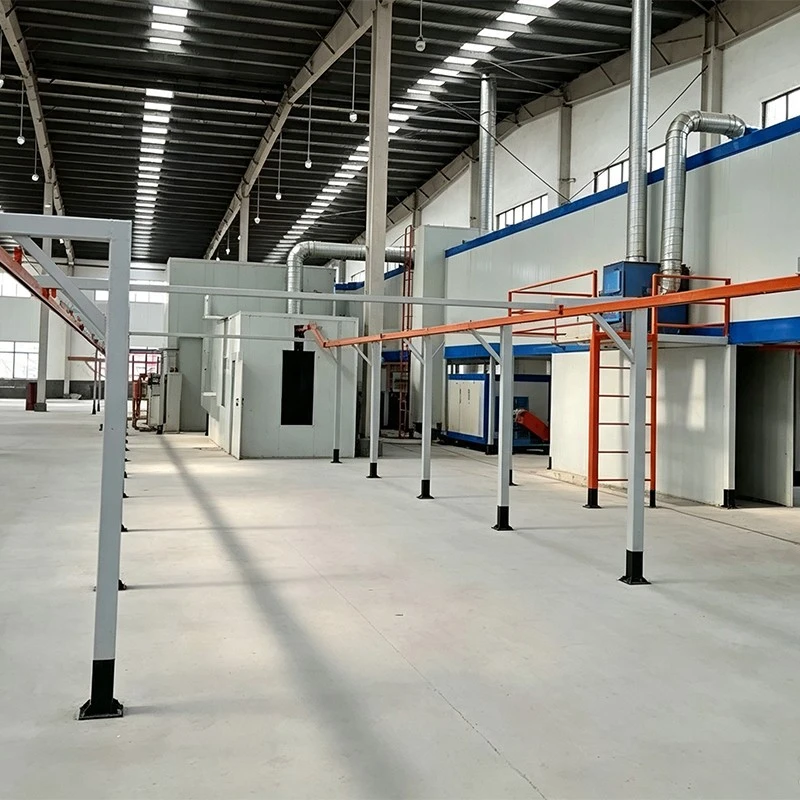
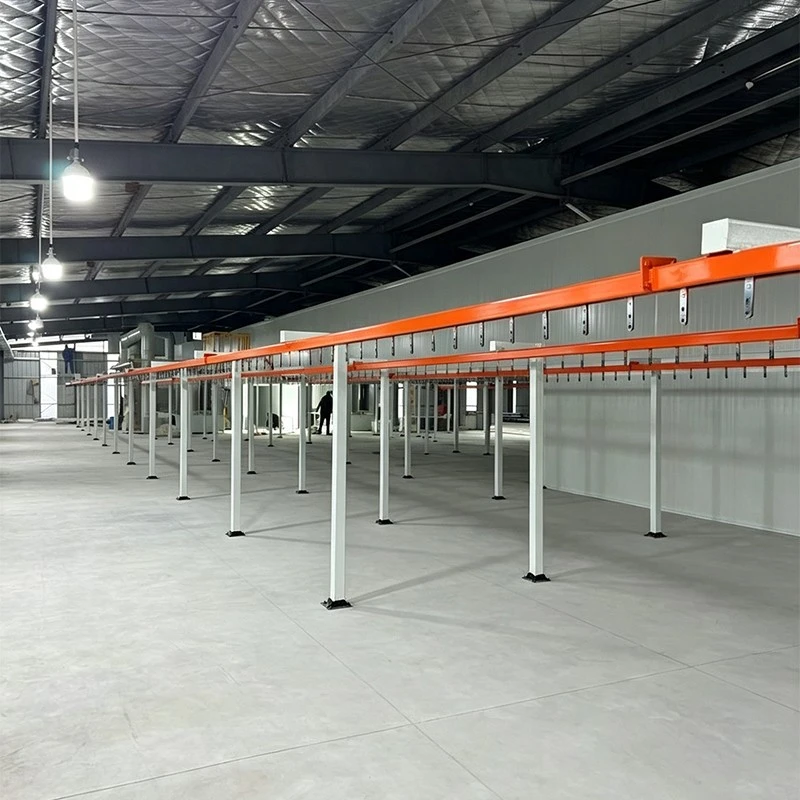
The conveyor system plays a huge role in ensuring coating uniformity. A well - designed conveyor system can move the complex - shaped products through the coating process at a consistent speed and in the right orientation. For example, our Product Conveyor Line is built to handle products of various shapes and sizes smoothly. It can be customized to have different speeds and directions, allowing the products to be coated evenly from different angles.
In addition, a Buffer Accumulation Conveyor Line can be very useful. It provides a buffer zone where products can be held in a queue, ensuring that each product has enough time in the coating area. This helps to avoid situations where products are rushed through the process, leading to uneven coating.
Monitor and Control the Coating Process
Continuous monitoring and control of the coating process are necessary. You need to keep an eye on parameters like coating thickness, temperature, humidity, and the flow rate of the coating material. Technologies such as ultrasonic thickness gauges can be used to measure the coating thickness in real - time. If the thickness is off in certain areas, adjustments can be made immediately, such as changing the spray pattern or the speed of the conveyor.
Another important aspect is the environment. Temperature and humidity can greatly affect the coating process. For example, high humidity can cause the coating to dry unevenly or develop blisters. So, it's essential to have a climate - controlled environment in the coating area.
Employee Training
Your employees are on the front - line of the coating process. They need to be well - trained on how to operate the coating equipment and handle complex - shaped products. Training should cover everything from pre - treatment procedures to troubleshooting common coating problems. Well - trained employees are more likely to identify issues early and take the right steps to ensure coating uniformity.
Testing and Quality Assurance
After the coating process, it's important to conduct thorough testing. This can include visual inspections, adhesion tests, and thickness measurements. By regularly testing the coated products, you can identify any recurring issues and make necessary adjustments to the coating process. Quality assurance should be an ongoing process, not a one - time thing.
Conclusion
Ensuring coating uniformity on complex - shaped products on a production line is definitely a challenge, but it's not impossible. By following these steps - proper pre - treatment, choosing the right coating method, optimizing the conveyor system, monitoring and controlling the process, training your employees, and conducting regular testing - you can achieve great results.
If you're in the market for a high - quality coating production line that can handle complex - shaped products, we're here to help. We've got the expertise and the right equipment to meet your needs. Don't hesitate to contact us for a detailed discussion on how we can customize a solution for you. Let's work together to make your coating process more efficient and your products look their best.
References
- "Coating Technology Handbook" - A comprehensive guide on different coating methods and best practices.
- Industry reports on coating production line efficiency and quality control.